
🟡 Building a Better Driving School · 8 min read
When I first became a driving instructor, being busy felt like success. These days, I measure success rather differently.
When I became an ADI, we were emerging from the pandemic.
It was an unusual time to start a driving school. Demand for lessons was high and, in many places, supply simply couldn’t keep up.
I was also working alongside a national driving school franchise. Pupil supply was part of the arrangement, so theoretically I didn’t need to worry too much about finding my own learners.
But from the beginning, I wanted to build something of my own.
I started developing the WS Driving School brand, building my own online presence and marketing myself locally.
Before long, I hardly needed the franchise to supply pupils at all.
More importantly, the people who found me through my own marketing tended to be the sort of learners I enjoyed working with.
That taught me an early lesson.
Good marketing isn’t simply about finding more customers. It’s about helping the right customers find you.
When Busy Meant Successful
In those early years, I thought a successful driving instructor was a busy driving instructor.
And I was busy.
I’d been encouraged to travel further afield for lessons. That meant there wasn’t necessarily much empty space in my working day.
The problem was that the gaps weren’t really gaps.
I was driving.
Finish one lesson. Travel to the next.
Another lesson. Another journey.
Then another.
The diary looked productive, but I hadn’t really considered what all that travelling was costing me.
Not simply in fuel.
In energy.
My Definition of Success Has Changed
Today, WS Driving School operates very differently.
My teaching area is deliberately compact—essentially Littleport to Ely.
My diary has structure too.
Lessons fit into established two-hour slots:
9–11am.
12–2pm.
3–5pm.
And, when I’m teaching an evening lesson:
6–8pm.
I generally teach around six hours a day, and Sunday and Monday are normally my days off.
There’s an important distinction here.
My students fit my diary. I don’t continually rebuild my diary around my students.
That might sound like a small operational decision.
It isn’t.
It’s one of the systems that allows me to do my job properly.
The Value of an Hour With Nothing In It
Keeping my teaching area local means the hour between lessons isn’t swallowed up travelling from one town to another.
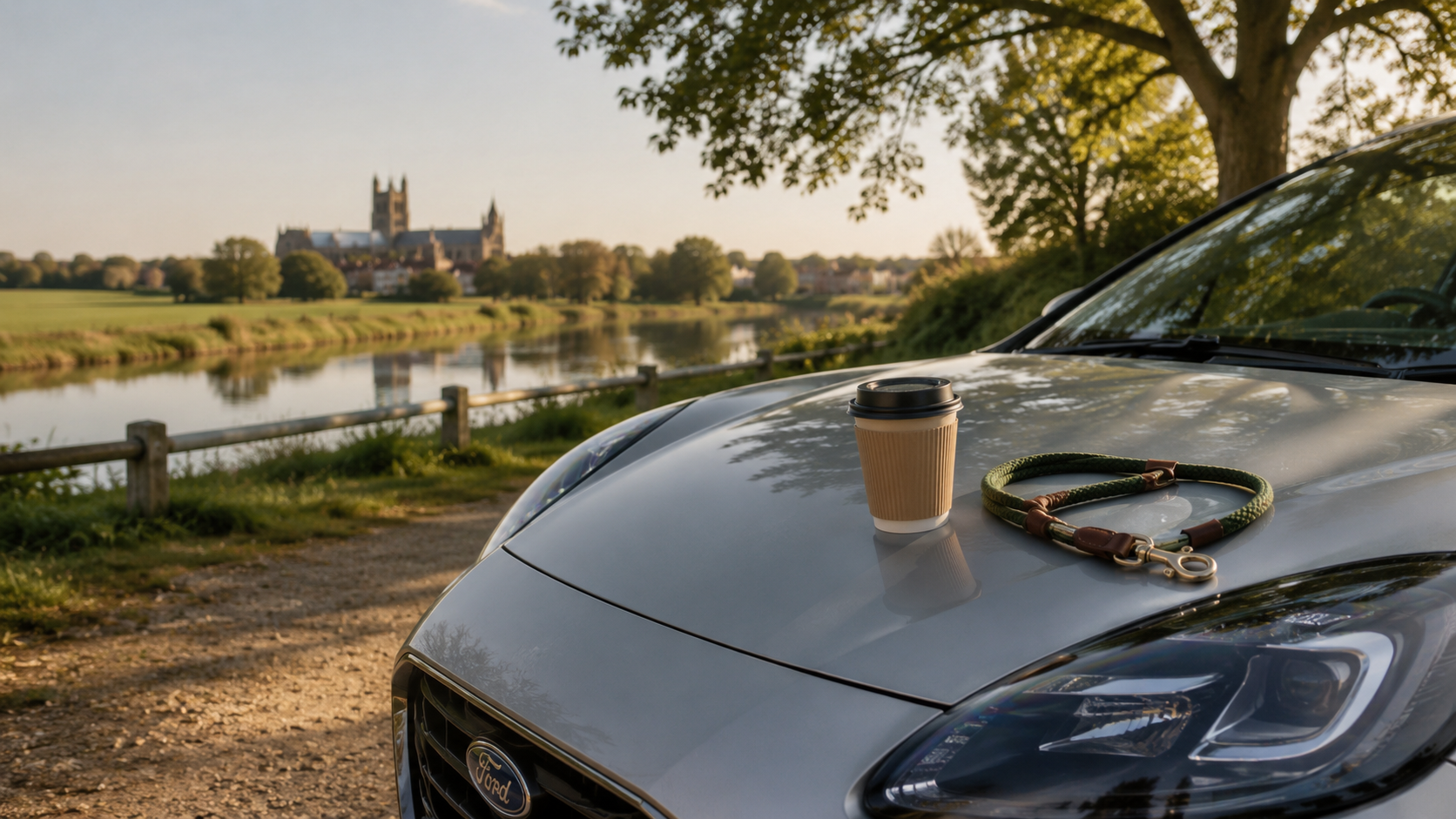
Sometimes I’ll have a coffee.
Sometimes I’ll reflect on the previous lesson and prepare for the next one.
There might be some administration to deal with.
I might even get the chance to take Crumble for a walk.
And sometimes I simply have a little space.
Years ago, I might have looked at that hour and thought:
Could I fit another lesson in there?
Now I think differently.
Because when 12 o’clock arrives, I want to be ready for the learner sitting beside me.
Not stressed from the previous lesson.
Not rushing because traffic held me up.
Not mentally somewhere else.
Ready.
That hour therefore has value even when it isn’t generating revenue.
Boundaries Are a Business System
We often think of business systems as apps, software and automation.
I’ve come to realise that some of the most valuable systems are much simpler.
My teaching area is a system.
My lesson times are a system.
My days off are a system.
My working hours are a system.
They’re also boundaries.
And boundaries don’t mean providing poorer customer service.
Done properly, they help me provide better customer service because they make the business sustainable.
Technology then supports those boundaries.
My student booking app, for example, has a useful feature that helps me fill a lesson slot when one unexpectedly becomes available.
The important thing is that the technology works around the structure I’ve created.
The system supports me. I don’t work for the system.
What Are You Worth?
There’s another area where my thinking has changed over the years.
Pricing.
Driving instructors sometimes worry enormously about what everyone else is charging.
I understand why.
But I think we also need to understand the value of what we provide and price accordingly.
Becoming an ADI isn’t easy.
There is considerable work involved in qualifying, and qualification shouldn’t be the end of our development.
We keep learning.
We invest in our cars, our businesses and ourselves.
And when someone books two hours of our time, they’re not simply buying two hours sitting in a car.
They’re buying the experience, preparation and professional development that allow us to make those two hours valuable.
That doesn’t mean charging whatever we like.
It means understanding our value rather than automatically competing on price.
Build Before You Need It
Perhaps one of the most useful things I did in those buoyant early years was recognise that demand wouldn’t necessarily stay that way forever.
I didn’t want to wait until I needed customers before thinking about where the next one would come from.
So I kept building.
A professional website.
My Google Business Profile.
My local reputation.
My own brand.
And, over time, more than 60 five-star Google reviews from people who had experienced what I actually provide.
None of those things appeared overnight.
They accumulated.
One learner.
One review.
One improvement.
One small decision at a time.
I’m fortunate today to have a business that allows me to make choices about where and when I work.
But I don’t regard that simply as luck.
I worked hard from the beginning to provide lessons that people genuinely valued, and I kept developing myself as an instructor.
Then I tried to build the business around that standard.
Better Doesn’t Mean Bigger
I still want WS Driving School to be successful.
I want a healthy diary.
I want the business to be profitable.
And of course I want learners to continue choosing me.
What I don’t particularly want is more for the sake of more.
I don’t need a larger teaching area.
I don’t want to cram another lesson into every available hour.
I don’t measure success by how exhausted I am at the end of the week.
These days, I’m much more interested in a different question:
Can I make the business work better?
Can I improve a system?
Can I reduce unnecessary travel?
Can technology remove an administrative job?
Can my website answer a question before somebody needs to contact me?
Can I create enough space between lessons to arrive at the next one properly prepared?
Can I earn appropriately for the value I provide without simply working more hours?
Those are much more interesting questions to me now.
Something to Think About
Perhaps you’re already running a successful driving school.
Perhaps you’re just starting one.
Either way, I’d encourage you to think about what success actually means to you.
Not what another instructor tells you it should look like.
Not how many pupils somebody has on their waiting list.
Not how many hours someone says they’re working on Facebook.
Your version.
Because a better driving school doesn’t necessarily need more learners, more territory, more turnover or more hours.
Sometimes better means having a coffee between lessons.
Sometimes it means getting home earlier.
Sometimes it means having systems that quietly do their job in the background.
And sometimes it means being able to take the dog for a walk before your next learner arrives.
When I started, I thought success meant being busy.
I’ve changed my mind.
I don’t want a bigger driving school.
I want a smarter one.
Wayne Smith
Founder, WS Driving Collective
Leave a Reply